

BA
3D technology has been used in the production of jewelry for over 20 years. It has developed tremendously and is today used much more than most people think and more than most jewelry brands, workshops and productions will like to admit, because stating that something is not “handmade” makes it sound cheaper, easier, and less valuable in the minds of most. 3D printing and shaping in a 3D program is not considered a craft, so its use in the jewelry industry is something you do not talk about.
I who was deeply fascinated by the 3D printing technology that I was introduced to early in my bachelor’s education found it strange. Why were they so reluctant to talk about it and what was it that was so less worthy? I considered the 3D program as a kind of workshop, the mouse was the extension of my arm and hands, which gave me access to various tools with which I could create things that I wasn’t able to create in the wood or metal workshop at the time, due to lack of craftsmanship skills. I found the loss of value through the use of technology questionable.
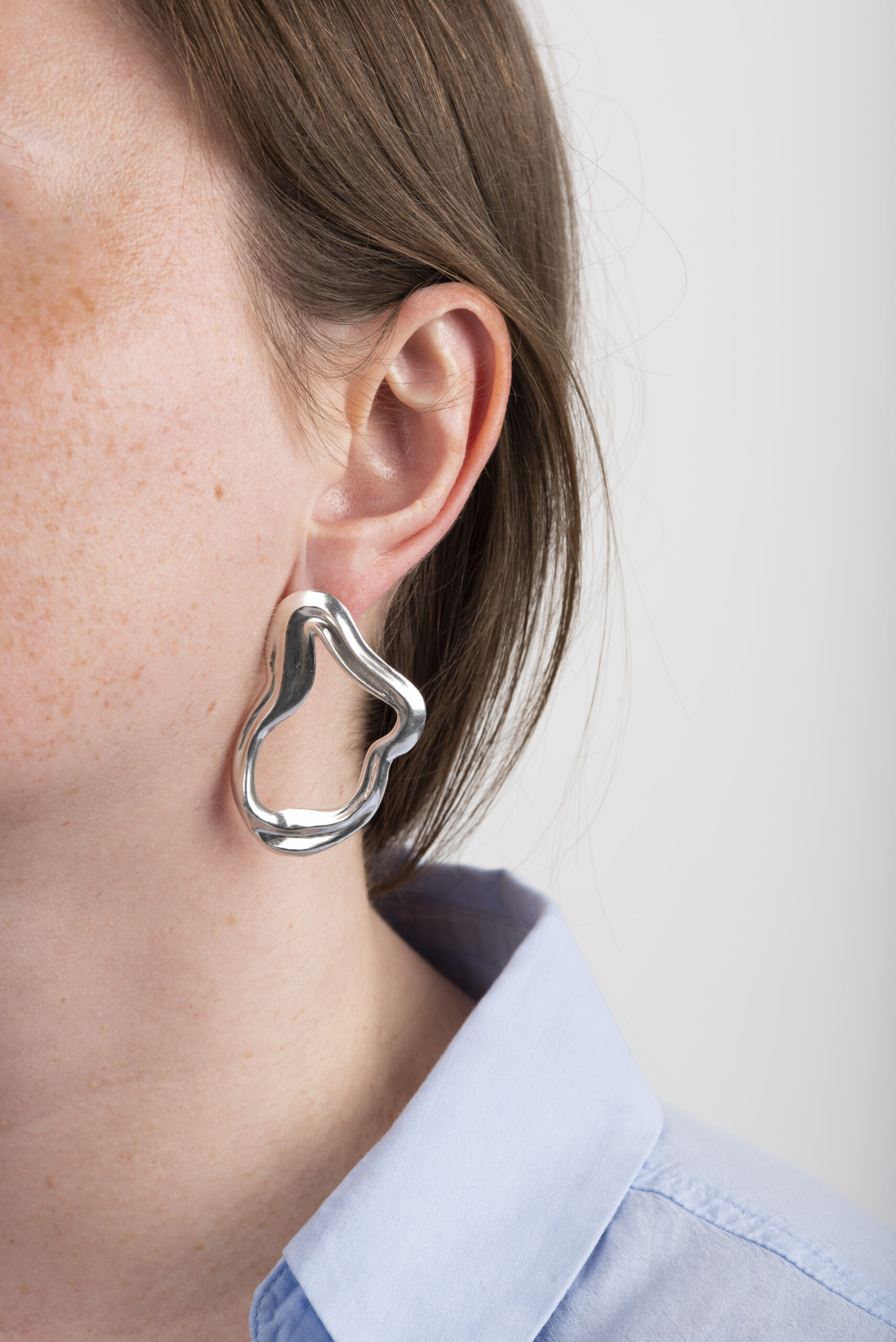
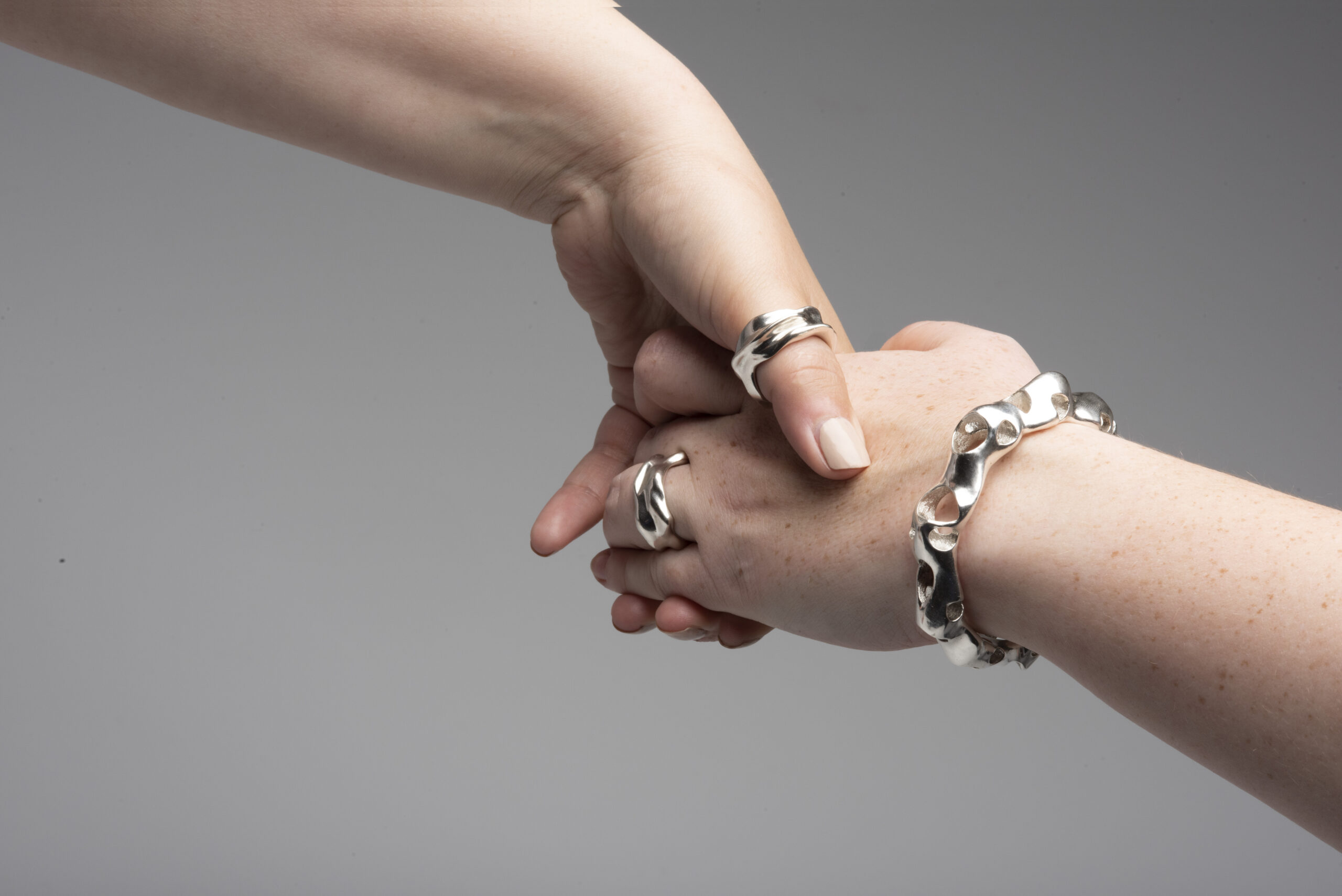
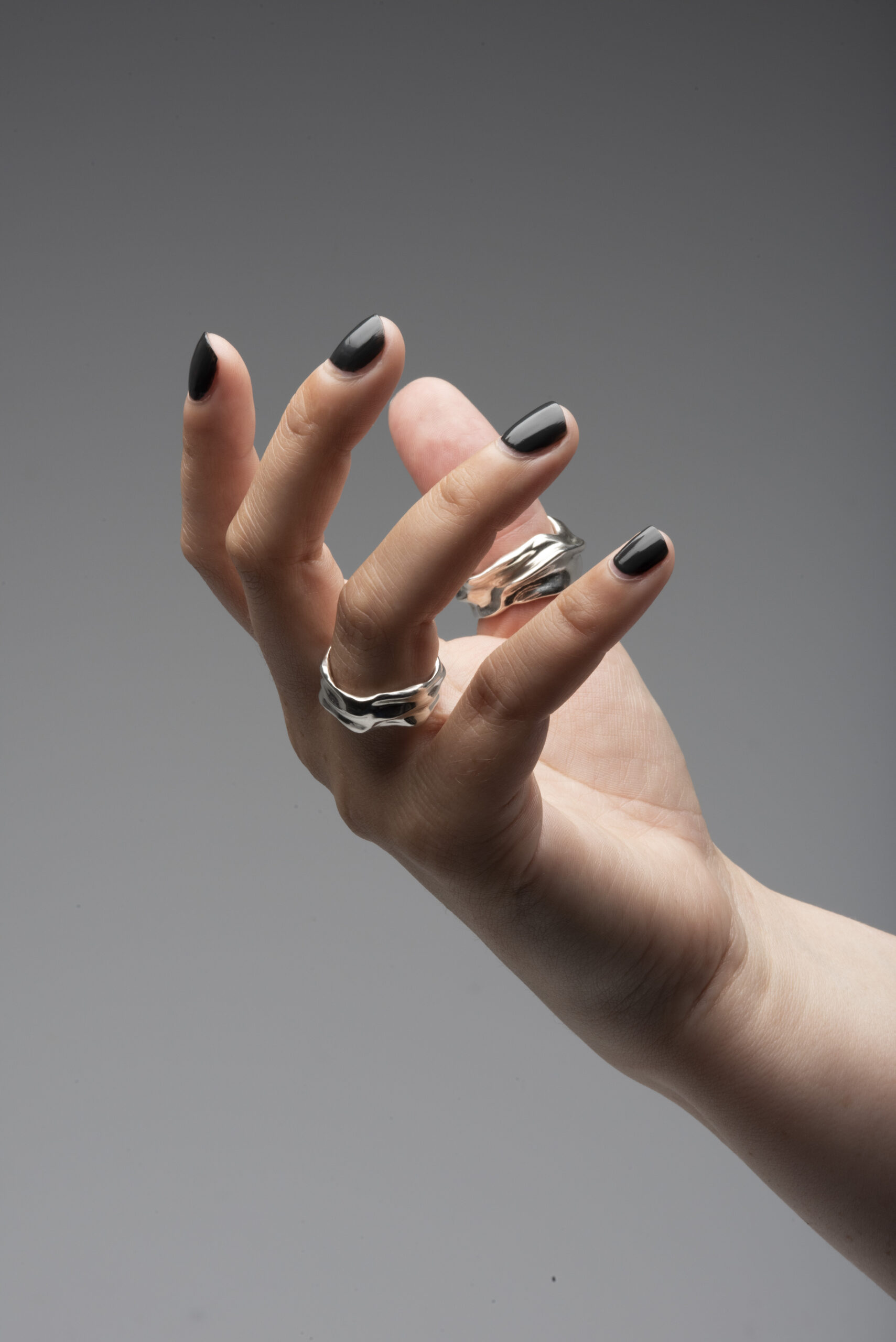
Material: 925 silver (Silvercast Ferris® File-A-Wax og VisiJet® M2 ICast)
At the end of my education, I chose to take up the subject again in my BA thesis hoping to find answers to some of the many questions. These sculptural jewelry pieces where the result of my bachelor project back in 2019 in collaboration with Danish 3D company Nexttech who generously accreed to become my parten, suppling by with material and 3D printing technology.
I searched for the qualities behind handcrafted wax and 3D printed wax for the manufacture of casted jewelry and jewelry elements. I tested the wax types in connection with 3 basic phases of jewelry production: shaping, casting and renovating. This was done to find out how the work processes differed from each other – finding advantages and disadvantages with both ways. But more importantly I did this to see if these 3 phases affected the aesthetic expression of the final jewelry piece, depending on whether it was handmade or made using 3d technology. Would it be visible which jewelry pieces were handmade and which were created with 3D?
The result of a very technical project was not only a series of jewelry objects, which were created through a combination of craftsmanship and 3D technology, but also the shedding light on a taboo subject: the use of technology such as 3D printing in jewelry craftsmanship.
+45 81 95 20 55
hallo@christine-kristensen.dk